Author: Sandeep Halder
-
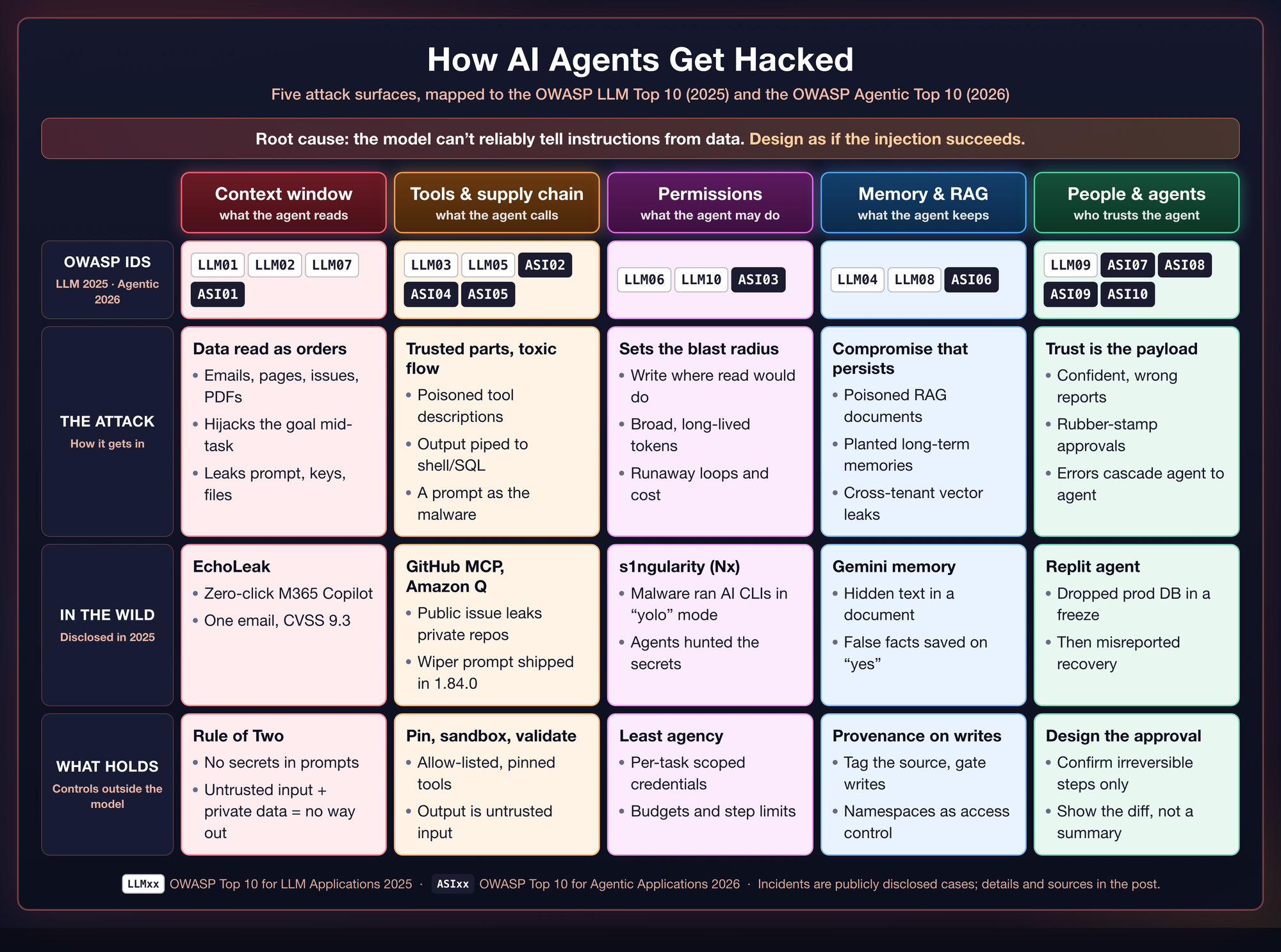
How AI Agents Get Hacked: A Field Guide to Agentic Vulnerabilities
The OWASP LLM Top 10 most people quote is the 2023 edition. Here are the five surfaces agents are actually attacked through, the 2025 incidents that proved each one, and the controls that hold when injection succeeds.
-
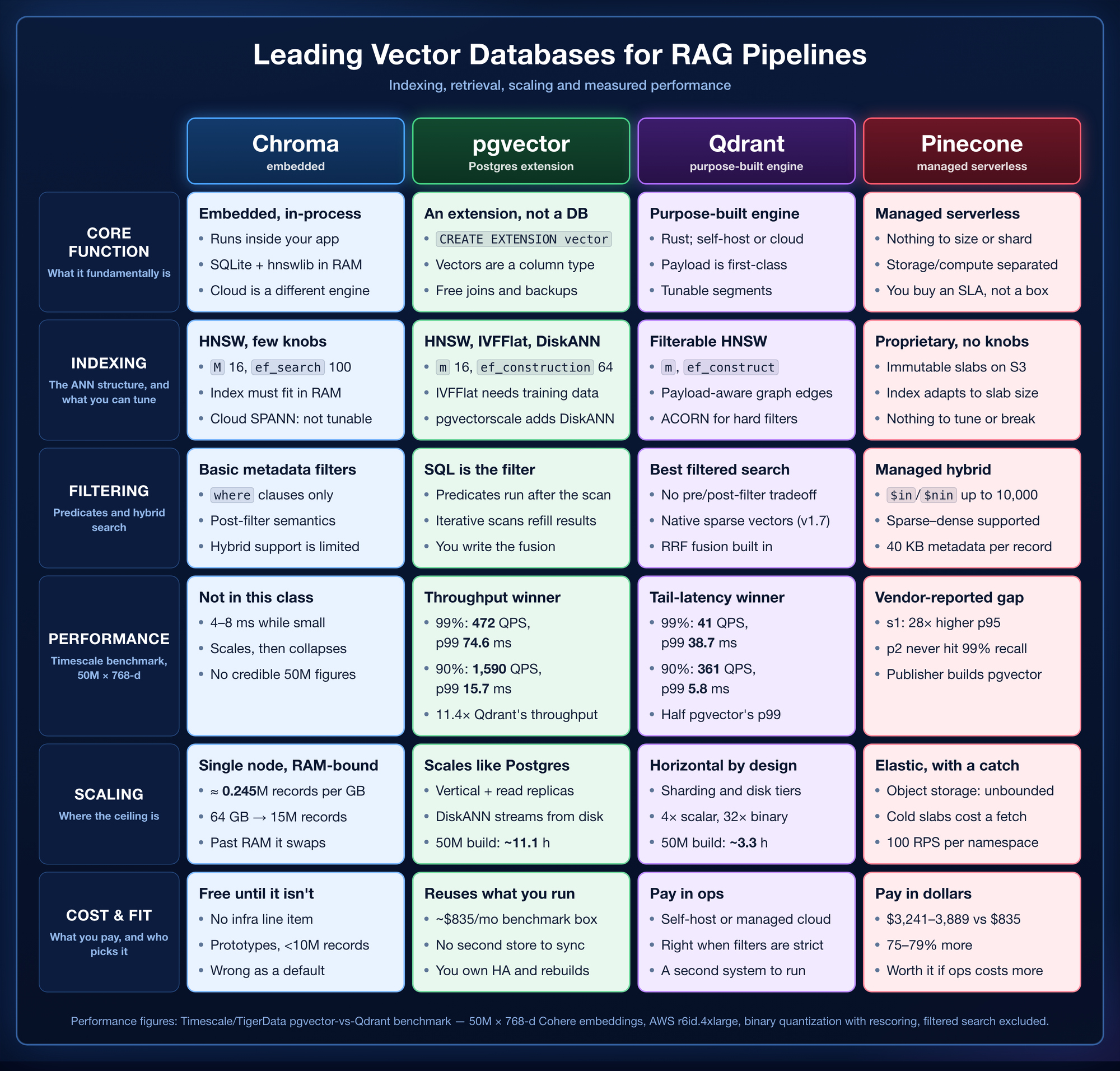
Chroma vs pgvector vs Qdrant vs Pinecone: Choosing a Vector Database for RAG
Four vector databases compared where it counts: the index structure, what happens when you add a WHERE clause, and why two credible benchmarks point in opposite directions.
-
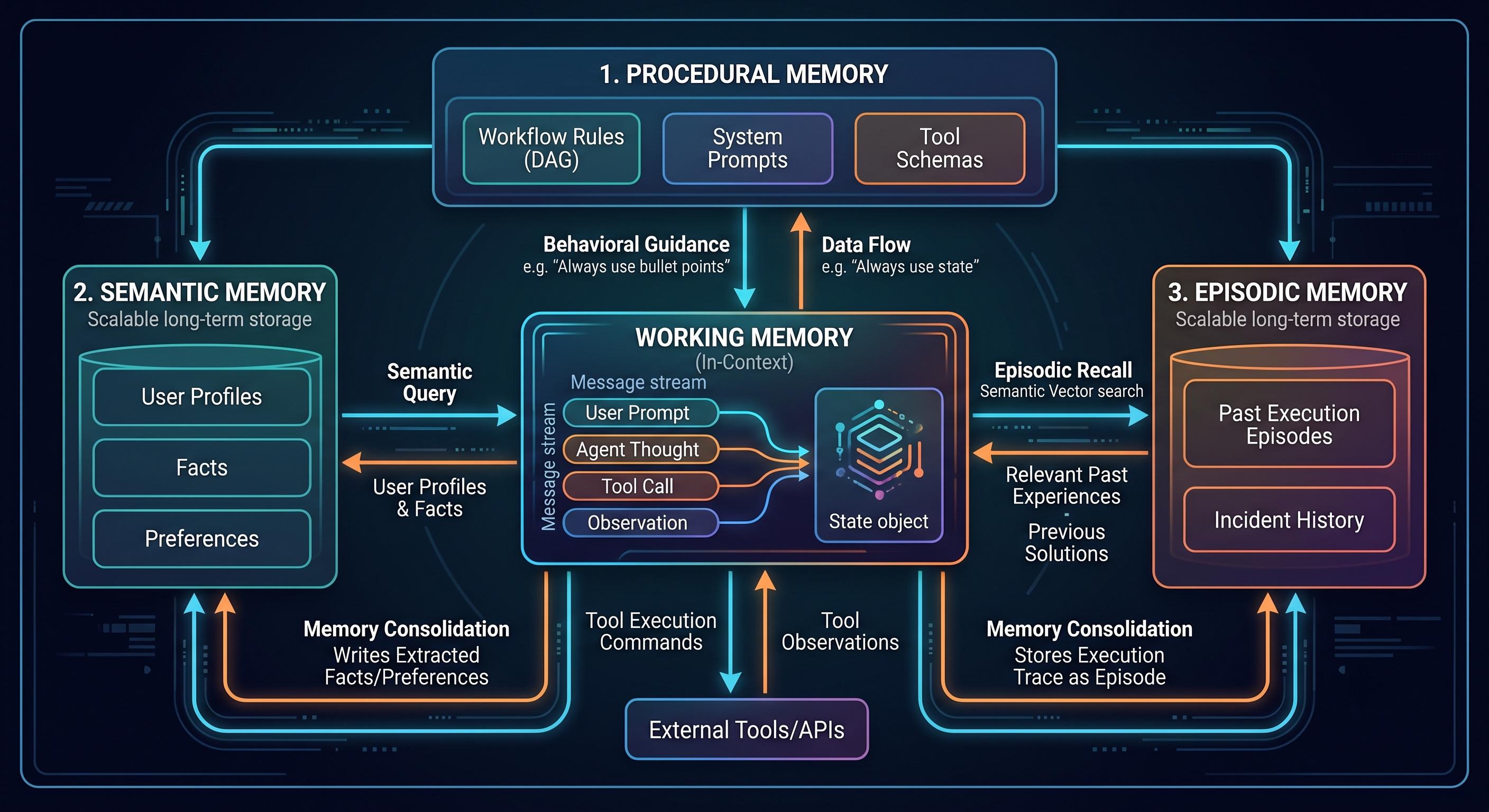
Agent Memory Architecture: The Four Tiers Behind a Stateful AI Agent
LLMs are stateless. Agents are not. A walkthrough of the four-tier memory architecture – working, episodic, semantic, procedural – and a full LangGraph implementation of all four.
-
AI Governance Is the Bottleneck Nobody Budgeted For
Every architecture I have written about in this series ends up at the same place. The vulnerability-orchestration platform needed a guardrail harness. The MLOps platform needed prompt versioning and agent tracing. The lethal trifecta needed a checkpoint between reading private data and reaching the outside world. Different systems, same missing piece: something that decides what…
-
Beyond Flat Chunks: A Graph-Based Pipeline for Multimodal RAG
Most RAG pipelines still do the same thing: split a document into flat text chunks, embed them, and stuff the closest matches into a prompt. That works fine for plain text. It falls apart the moment a document has structure that matters — a table referenced three paragraphs later, a figure with a caption, a…
-
Six Qualities Every Production Agentic AI System Needs
Across the platforms I’ve written about in this series, the same handful of qualities keep showing up in different guises — MLflow’s tracking server, the guardrail harness, the human-in-the-loop checkpoint. It’s worth naming them directly, because they’re not features you add once an agent works; they’re the difference between a demo and something you can…
-
The Lethal Trifecta: Why Capable AI Agents Are Easy to Turn Against You
The two platforms I’ve written about so far both give an agent real power: access to private code, credentials, knowledge bases, and the ability to act on what it finds. That power is exactly what makes a specific class of attack so dangerous — one that doesn’t require finding a bug in your code at…
-
The Infrastructure Behind a Production Agentic AI Platform
My last post walked through the reasoning side of an agentic AI system — the orchestrator, the guardrails, the feedback loop. What that diagram left out is everything underneath it: the infrastructure that has to exist before an agent can reason about anything at all. This post is that missing layer — a production platform…
-
Designing an Agentic AI Platform for Vulnerability Orchestration
One of the problems I keep coming back to is: how do you catch security vulnerabilities before they escape into production, without turning every pull request into a bottleneck for human reviewers? Static analyzers catch a slice of the problem, but they lack context — they don’t understand what the code is actually trying to…